Gardening Lee — Recycling and Sustainability for Greener Gardens
 At Gardening Lee we prioritise an eco-friendly waste disposal area and a practical, community-focused approach to a sustainable rubbish gardening area. Our commitment blends on-the-ground gardening work with clear recycling goals, efficient collection, and partnerships that give materials a second life. We recognise that a true recycling and sustainability strategy needs measurable targets, collaborative logistics and visible action in every borough we serve.
Our recycling percentage target is ambitious yet realistic: we aim to achieve a 70% diversion rate from landfill across all Gardening Lee operations by 2030. This target covers green waste, soils and compostable trimmings, reusable pots and planters, and sorted construction detritus from landscaping projects. Achieving this requires both meticulous on-site sorting and strong links to local processing hubs to maintain low contamination rates.
 We work within the local boroughs' approach to waste separation — following kerbside organics and dry recycling rules, and extending them to our green sites. That means on-site bins for garden organics, a separate stream for wood, and clearly labelled containers for plastics, metals and glass. Keeping these flows clean maximises recycling recovery at the transfer stations and high-quality compost outcomes at local facilities.
How we manage materials and local transfer stations
Our teams route materials to approved local transfer stations and composting yards to reduce haulage miles. We prioritise facilities within the borough or neighbouring districts to keep carbon emissions down and to support the circular economy locally. At these transfer stations, green waste is processed into bulk compost or woodchip, and building wastes can be sorted for reuse or recycling.
 Key on-site practices include:
- Segregated collection for green waste, food-contaminated organics, and recyclables to match borough collection criteria.
- Reuse and repair of hard landscaping supplies and planters rather than disposal.
- Donation-ready staging areas where usable soil, bricks, and pots are kept for charitable partners.
Partnerships, charities and reuse networks
Gardening Lee actively partners with local charities and community groups to expand reuse opportunities. We work with neighbourhood reuse centres and social enterprises to channel good-condition pots, raised beds and reclaimed paving to projects supporting community gardens and allotments. These partnerships reduce waste, create social value and help us meet our sustainable rubbish gardening area objectives.
We also collaborate with food redistribution organisations and tool libraries for items that are surplus to projects. By doing this we ensure that materials collected from landscaping and garden clearances find a productive next use instead of being incinerated or landfilled. These collaborations are central to our circular approach.
 To formalise this work we operate a small network of drop-off points and regular handover schedules with charities, so that bulk items and quality soil have a clear, auditable path to reuse.
Logistics are a big part of lowering our footprint. Gardening Lee has invested in a fleet of low-carbon vans — including electric and low-emission hybrids — to transport sorted wastes, move reusable items to partners, and collect green materials from sites. Our route planning focuses on consolidating collections to reduce vehicle miles and idling, which supports our ambition for a low-impact, sustainable waste area across the service region.
We monitor fleet efficiency with telematics and prioritise charging infrastructure close to transfer stations and charity hubs to keep turnaround times short. The combined effect of shorter trips, cleaner vehicles and better sorting is a reduction in transport-related emissions associated with our recycling and sustainability programme.
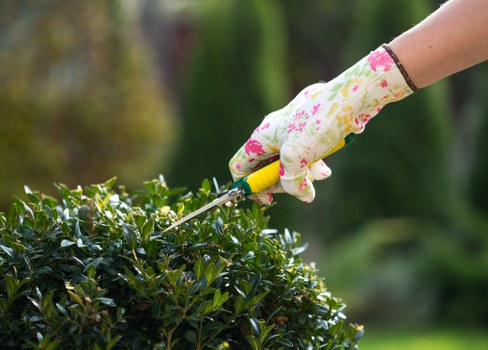 Education and continuous improvement are part of every project. Our crews receive training on the boroughs' waste separation standards, contamination prevention, and the best ways to prepare materials for reuse so that our recycling streams remain high quality and resilient.
Through targeted recycling targets, strategic use of local transfer stations, strong charity partnerships and investment in low-carbon vans, Gardening Lee aims to set a practical standard for an eco-friendly waste disposal area and sustainable rubbish gardening area. We measure progress quarterly and publish internal reports that track diversion rates, truck miles saved, and volumes donated to partner organisations.
Practical examples of activities we run include community soil swaps, scheduled bulky collection drops to reuse centres, and coordinated compost outputs that feed local urban farms. Each activity helps increase our overall recycling percentage and demonstrates how green spaces can be managed without producing unnecessary waste.
Our approach is iterative: we review every site for opportunities to improve sorting, reduce contamination, and increase recovery. By working closely with borough waste schemes, transfer stations and charitable reuse groups, Gardening Lee delivers tangible sustainability outcomes that benefit our neighbourhoods and the environment.